


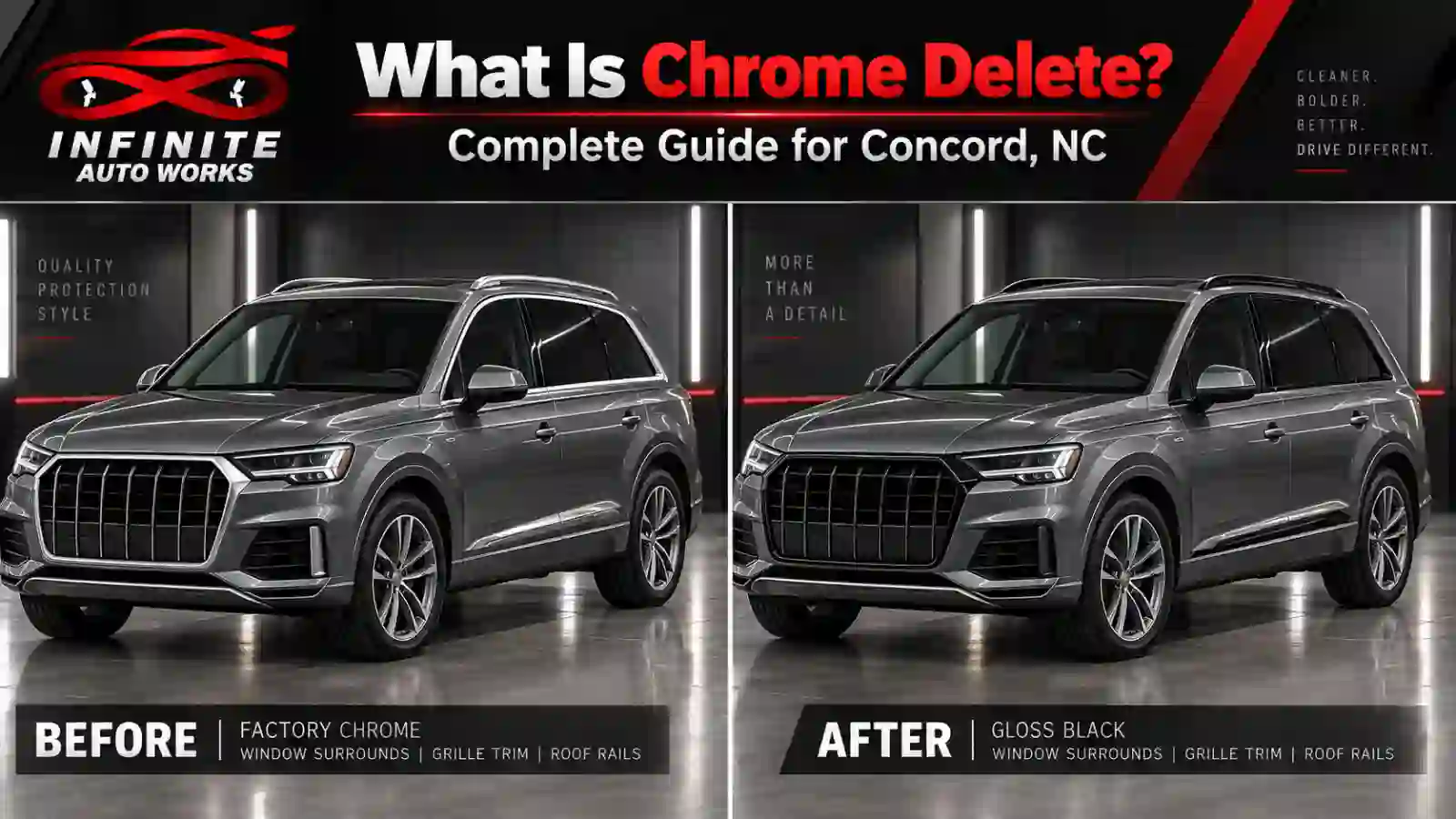
Chrome delete is one of the most requested customization jobs at shops across Concord, NC. Factory chrome trim can look outdated against a modern paint job, especially on newer SUVs and EVs. Infinite Auto Works fields chrome delete calls nearly every week from drivers who want a cleaner, blacked-out look. This guide explains what chrome delete means, which vehicle areas it covers, and how vinyl wrap compares with paint. Drivers researching paint protection film in Concord, NC often ask about chrome delete in the same visit.
What Does Chrome Delete Mean?
Chrome delete refers to covering or replacing a vehicle’s factory chrome trim with a black or dark-colored finish. The term applies whether the material used is vinyl film, paint, or a dip coating. Most owners choose it to modernize an older design or match a car’s color scheme.
The name comes from the visual result: chrome trim appears to disappear, or get “deleted,” from the vehicle. In most cases, installers remove nothing. Installers cover the existing chrome with new material instead of pulling it off the car.
Where Is Chrome Trim Typically Found on a Car?
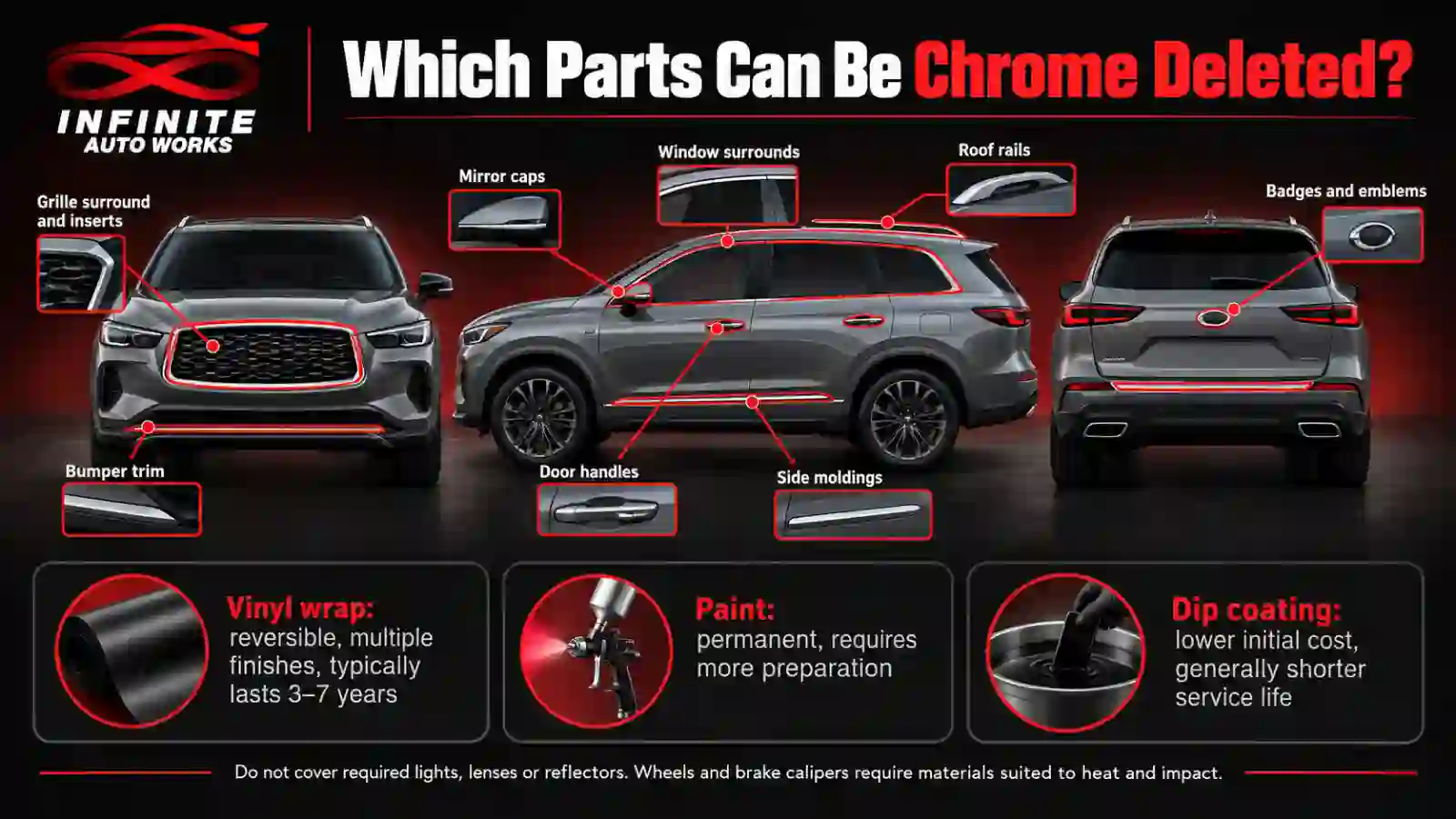
Factory chrome usually appears in five main spots: window surrounds, grille inserts, door handles, mirror caps, and badges. Trucks and SUVs often add chrome to roof rails and tailgate trim. Luxury brands like Mercedes-Benz and Lincoln tend to use more chrome than most other segments.
Older vehicles from the 1990s and early 2000s used chrome far more heavily, covering bumpers, moldings, and full grille surrounds. Modern factory trim uses smaller, more targeted chrome accents. That is part of why chrome delete is faster and more affordable on newer vehicles.
Which Parts of a Vehicle Can Be Chrome Deleted?
Window and Door Trim
Window surrounds are the most common chrome delete request. Covering this trim in black narrows the visual gap between the glass and body panels. The change is visible from every angle.
Grille and Front Fascia Accents
Grille inserts, badges, and license plate surrounds all take a matte or gloss black film well. This area has the biggest visual impact on a vehicle’s stance. It sits at eye level in most photos and in traffic.
Mirror Caps and Door Handles
Mirror caps and door handles are smaller jobs that finish off a build. Many owners pair them with window trim for a complete, cohesive look.
Wheels and Calipers
Chrome wheels and calipers can also be blacked out. This work uses paint rather than vinyl film, because of curb impact and brake heat. Infinite Auto Works handles gloss black wheel and caliper refinishing as a companion service to chrome delete.
Why Is Chrome Delete So Popular Right Now?
Modern car design has moved toward minimalism, and chrome reads as dated next to that style. Flat, monochrome finishes photograph better and match the matte and satin trends on new vehicle launches. Electric vehicles accelerated the shift, since many EVs ship with less chrome from the factory.
Luxury and EV owners are not the only ones driving the trend. Compact car and truck owners also request chrome delete, since the look reads as aggressive at any price point. Custom car shows and social media builds have normalized the blacked-out look across nearly every vehicle segment.
Chrome Delete on Popular Makes and Models
Tesla and Other EVs
Tesla owners in Concord are frequent chrome delete customers, since the brand’s design already leans minimalist and all-black. Removing the remaining chrome window trim completes that clean aesthetic on a Model 3, Model Y, or Model S.
BMW, Mercedes-Benz, and Audi
German luxury brands ship with more chrome trim than most EVs, making the contrast after a chrome delete more dramatic. BMW owners often pair window trim and grille surround work for a blacked-out front end. Mercedes-Benz and Audi owners tend to start with window trim and mirror caps.
Trucks and SUVs
Trucks and SUVs carry more chrome trim than most sedans, including grille inserts, tow hooks, and roof rails. A full chrome delete package on a truck takes longer than a sedan, because there is more area to cover. For that reason, off-road and overlanding builds often request matte black.
Vinyl Wrap: The Most Common Chrome Delete Method
How the Vinyl Wrap Process Works
Vinyl wrap is the standard method for chrome delete because it is precise, reversible, and finish-flexible. Infinite Auto Works preps each trim piece with a full clean and degrease before cutting film to match its shape. Installers then heat the vinyl so it stretches around curves without lifting.
A squeegee removes air bubbles while the film is still warm, and installers tuck the edges for a factory-look finish. The process wraps up in a single visit for most trim packages. For a closer look at finish choice, see how vinyl wraps transform a vehicle’s appearance.
Why Cast Vinyl Outperforms Calendered Vinyl
Cast vinyl is thinner, more conformable, and holds color longer than calendered vinyl. It wraps around tight curves like mirror caps and window pillars without cracking. Budget vinyl kits often use calendered film, which is why they shrink or fade within a year or two.
Choosing a Finish: Gloss Black, Satin Black, Matte Black, and More
Gloss black is the closest match to a factory-painted look, reflecting light the same way a repaint would. Satin black sits between gloss and matte, with a soft sheen that hides fingerprints better than gloss. Matte black gives the most aggressive, blacked-out look and has become the top finish on trucks and SUVs.
Beyond black, some owners choose carbon fiber texture, brushed metal, or color-matched film to blend trim into the body paint. Each finish uses the same cast vinyl base, so durability stays consistent across color choices. Switching finishes later just means wrapping over the old one.
Chrome Delete vs Painting: Which Lasts Longer?
Painting chrome trim gives a permanent, factory-integrated finish that never peels at the edges. It also costs more than vinyl wrap and cannot be reversed once the car sells. Vinyl wrap trades a small amount of long-term durability for lower cost and full reversibility.
| Factor | Vinyl Wrap | Paint |
| Typical lifespan | 3 to 7 years | 7 to 10+ years, permanent |
| Reversible | Yes, removable without damage | No, requires a repaint to undo |
| Typical cost | Lower | Higher, professional labor required |
| Finish options | Gloss, satin, matte, textures | Gloss or matte only |
| Best for | Leased vehicles, frequent style changes | Owners keeping the car long term |
Painting also demands more prep work than vinyl. Professional paint correction removes swirl marks and contamination first, since fresh paint bonds better to a corrected surface. Skipping that step is the top reason painted chrome delete jobs fail early.
For that reason, most Concord drivers choose vinyl wrap. Paint makes more sense on a vehicle staying in the family long term. The choice comes down to budget and how long the owner plans to keep the car.
How Much Does Chrome Delete Cost in 2026?
Chrome delete pricing depends on vehicle size, trim scope, and finish choice. Installers report $500 to $2,000 as the typical range for a full package, based on 2026 wrap-shop pricing. A small sedan lands near the low end, while a full truck or SUV package runs higher.
Partial packages cost less than full coverage. Window trim alone typically runs a few hundred dollars, while adding the grille, mirrors, and badges raises the total. Finish choice matters too, since specialty finishes like carbon fiber cost more than standard black.
To get an accurate number, measure the trim on the specific vehicle. A short walk-around is usually enough to quote a chrome delete package. Chrome coverage varies even between two vehicles of the same model year.
How Long Does Chrome Delete Last, and How Is It Maintained?
Professionally installed vinyl wrap chrome delete lasts three to seven years with normal care. Direct sun and frequent automatic car washes shorten that window. Trim in shaded areas, like lower door handles, tends to outlast trim on flat, sun-exposed surfaces like hoods.
Maintenance stays simple. Hand washing with a pH-neutral soap keeps the film intact longer than machine washes with spinning brushes. A quick edge check every few months catches lifting early, and small touch-ups cost far less than a full re-wrap.
North Carolina’s humidity and strong summer UV can shorten that lifespan compared to milder climates. Garage-kept vehicles in Concord and the surrounding area tend to land on the longer end of the range.
Is Chrome Delete Reversible? What Removal Looks Like
Vinyl wrap chrome delete is fully reversible in most cases. A heat gun softens the adhesive, and the film peels away cleanly without damaging the chrome underneath. This works as long as the trim was properly prepped before installation.
Painted chrome delete is not reversible without a repaint. This is the main tradeoff owners weigh when comparing chrome delete with painting for a vehicle they may sell later.
Well-prepped trim looks factory-fresh again after removal, with no adhesive residue on the chrome underneath. Trim that was not cleaned properly before the original install may show faint outlines.
Does Chrome Delete Affect Resale Value?
Reversible chrome delete has little effect on resale value, since a buyer or dealer can restore the factory chrome look. A painted chrome delete is a more permanent change. Some buyers view it as a customization rather than a factory option.
Well-installed vinyl wrap often has a neutral or slightly positive effect on EVs and luxury vehicles. The blacked-out look already appeals to many buyers in these segments. Peeling or faded film has the opposite effect, since it signals neglected maintenance rather than intentional style.
Vehicles headed for trade-in typically show better with chrome delete removed and the original trim restored. This especially applies once the wrap starts to show wear. Vehicles sold privately to enthusiast buyers often keep more value with a clean chrome delete still in place.
What to Look for in a Chrome Delete Installer
Not every wrap shop handles chrome delete the same way. A qualified installer should use cast vinyl rather than cheaper calendered vinyl. Cast film holds its edge and color far longer on tight curves.
Ask to see close-up photos of finished window trim and mirror caps, since lifting shows up first at those edges. A shop that also installs paint protection film and ceramic coating is generally set up to handle multi-surface prep correctly. Naming real film brands, like 3M, Avery, or Oracal, is another good sign.
A written quote based on an in-person walk-around is a good sign. Phone-only estimates without seeing the vehicle tend to miss trim pieces. That often leads to surprise charges once the job starts.
Common Chrome Delete Mistakes to Avoid
Most chrome delete problems trace back to a handful of preventable mistakes. Knowing what causes early failures helps owners evaluate whether an installer is cutting corners.
Skipping Surface Prep
Chrome trim that is not fully cleaned and degreased before wrapping is the top reason vinyl lifts early. Wax, road grime, and old adhesive residue all block the film from bonding properly.
Using Thin, Low-Grade Vinyl
Some DIY kits use calendered vinyl that shrinks in cold weather and fades faster in direct sun. The film may look fine for the first few months before edges start curling.
Wrapping Over Damaged or Pitted Chrome
Vinyl film follows the surface underneath it, so pitted or corroded chrome shows through the wrap over time. Trim in poor condition usually needs a light sand and primer before wrapping.
DIY Chrome Delete vs Professional Installation
DIY chrome delete kits are widely available and cost less upfront than professional installation. The tradeoff is time and finish quality. Window trim and mirror caps have curves that are hard to wrap cleanly without practice.
A rushed DIY job often lifts at the edges within months. That then requires a professional fix, which costs more than starting with a pro. Professional installation also protects long-term finish quality and edge durability.
Vehicle owners doing chrome delete near reflectors or brake lights should confirm the film does not cover required lighting equipment. North Carolina law sets specific requirements for vehicle lighting equipment. Covering a reflector or lens can create a roadworthiness issue.
Chrome Delete in Concord, NC: The Bottom Line
Chrome delete is a straightforward way to modernize a car’s look without a full repaint. Vinyl wrap remains the most popular method because it is reversible and finish-flexible. Painted trim suits owners planning to keep a vehicle long-term.
Concord and Charlotte drivers who want to see finish samples in person can start with a quick walk-around quote. Infinite Auto Works pairs chrome delete with paint protection film for owners wanting day-one protection. It helps to know how long ceramic coating protection actually lasts before booking a combined package.
Frequently Asked Questions
Is chrome delete worth it on a daily-driven car?
Yes for most drivers. Chrome delete modernizes a car’s look for far less than a full repaint and stays fully reversible if plans change. It pays off fastest on vehicles kept three or more years. The finish typically lasts three to seven years with normal care and regular washing.
How long does a professionally installed chrome delete last?
A professionally installed vinyl chrome delete typically lasts three to seven years. Sun-exposed panels like hoods fade faster than shaded trim like lower door handles. Hand washing, regular edge checks, and covered garage parking all help the film reach the longer end of that range.
How much does chrome delete cost on average in 2026?
Chrome delete typically costs $500 to $2,000 in 2026, based on current national pricing data gathered from professional wrap shops. A small sedan with window trim only usually lands near the low end. A full SUV or truck package with grille, mirrors, and roof rails costs noticeably more per vehicle.
Can chrome delete be removed if a vehicle is sold or leased?
Yes, vinyl wrap chrome delete is reversible in most cases. A heat gun softens the adhesive, and the film peels away cleanly without damaging the factory chrome underneath. This matters most for leased vehicles, trade-ins, or owners planning to sell within the next year or two after installation.
Is chrome delete better than painting trim black?
It depends on the goal. Painting gives a permanent, factory-integrated finish that costs more and cannot be undone. Vinyl wrap costs less, offers more finish options, and stays fully reversible. Most owners planning to sell, lease, or change styles later choose wrap instead.
Is Plasti Dip a good alternative to vinyl wrap for a chrome delete?
Plasti dip costs less than vinyl wrap but peels sooner, usually within one to two years of daily driving. It also struggles to hold tight curves like mirror caps cleanly without bubbling in the sun. Vinyl wrap holds a cleaner edge much longer and offers far more finish and color options.