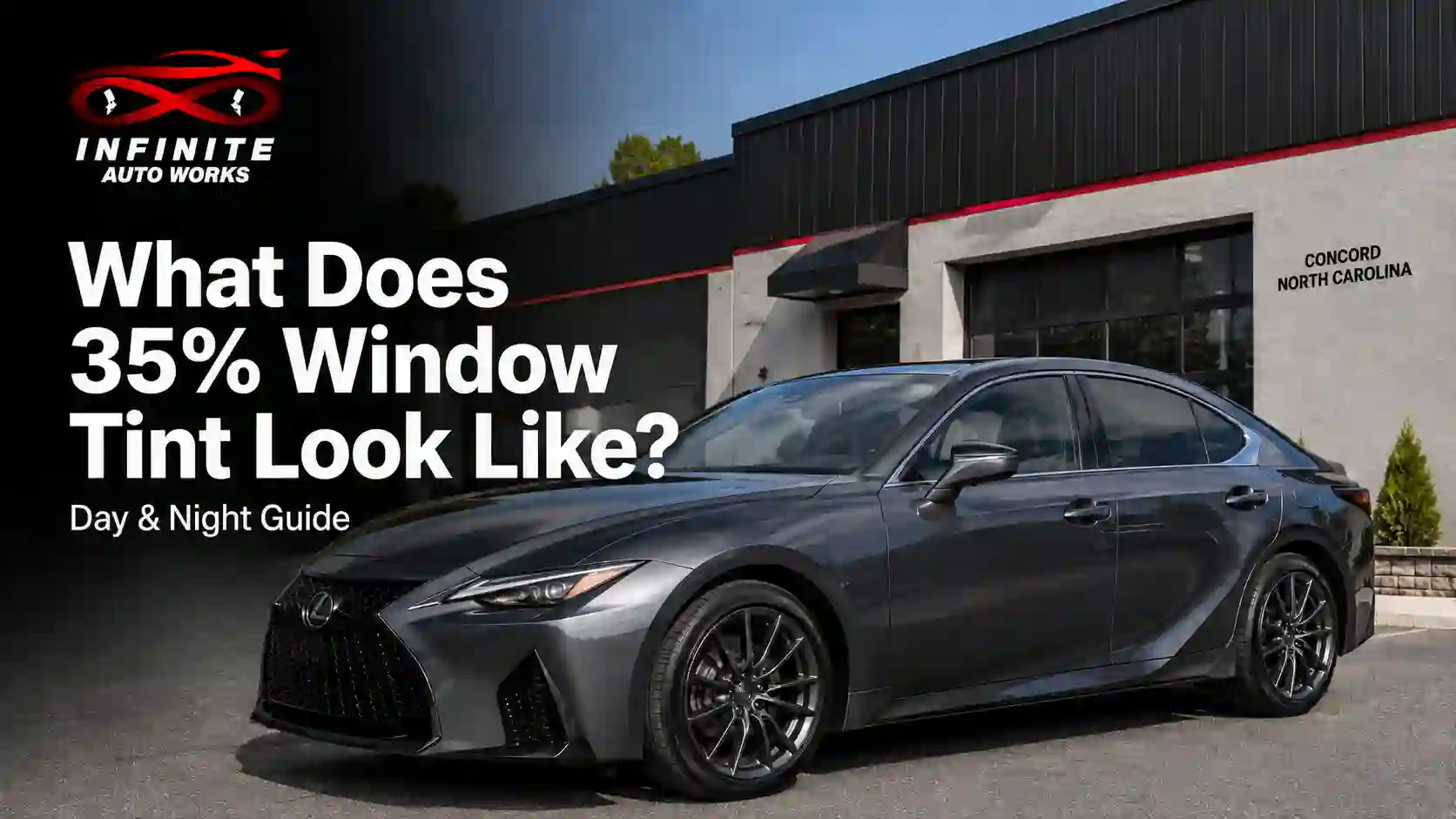
Drivers often ask what 35% window tint looks like before selecting a film. It creates a noticeable medium shade without producing a near-black appearance. Daylight, cabin color, factory glass, and film construction can change that result. Infinite Auto Works provides automotive window tinting in Concord, NC for drivers comparing shade, clarity, and solar performance. This guide explains how 35% looks inside and outside a vehicle.
What Does 35% Window Tint Mean?
The percentage describes Visible Light Transmission, commonly called VLT. A finished window at 35% VLT allows 35% of visible light through. It blocks the remaining 65% of visible light.
Lower VLT numbers create a darker view. A 70% window looks light, while a 20% window looks much darker. Five-percent film creates a very dark appearance and is often called a limousine shade.
The number does not measure heat rejection, ultraviolet protection, glare control, or product life. Those results depend on the complete film specification. VLT only describes how much visible light passes through the installed window.
What Does 35% Tint Look Like During the Day?
In daylight, 35% tint usually creates a medium smoke-gray appearance. People outside may see shapes inside, but faces and small details become less clear. Direct sunlight can make the glass look lighter than it appears in shade.
From inside, the road remains visible with reduced brightness and glare. Technicians at Infinite Auto Works can show physical samples against the actual vehicle glass. A sample gives a better preview than a photograph displayed on a phone.
Bright exterior light and a shaded cabin create most daytime privacy. Open sunroofs, pale seats, or bright objects inside can make the cabin easier to see. Thirty-five percent should not be presented as complete visual concealment.
What Does 35% Tint Look Like at Night?
At night, 35% glass reduces available light compared with clear glass. Streetlights, mirrors, pedestrians, and road edges may appear dimmer. The difference is more noticeable on rural roads, in rain, and in dark parking areas.
Exterior appearance also changes after sunset. A dark cabin can still be difficult to see from outside. Turning on the interior lights makes people and objects much easier to see through the glass.
Most drivers find 35% more practical at night than 20% or 5%. Vision, road lighting, mirror use, and windshield condition still affect comfort. Drivers who often use unlit roads may prefer a lighter shade.
Can People See Through 35% Window Tint?
People can often see through 35% tint under the right lighting. Daytime viewing usually reveals outlines without providing full cabin privacy. A person standing close to the vehicle may see more than someone across a parking lot.
The viewing direction matters. A person on the darker side can usually see toward the brighter side. This explains why drivers can see outward during daylight while outside viewers see less of the cabin.
Interior lighting reduces that advantage at night. The team at Infinite Auto Works can compare shades on the vehicle before installation. Drivers should keep valuables out of sight instead of treating film as a security barrier.
What Makes 35% Tint Look Darker or Lighter?
The same labeled shade can look different across two vehicles. Several visual and technical factors create that difference.
Factory Glass
Factory glass already limits some visible light. Rear privacy glass on an SUV may start much darker than a sedan’s front glass. Adding film changes the overall look and feel.
Interior Color and Cabin Design
Black seats and dark trim absorb light, making windows look darker from outside. White or tan interiors reflect more light toward the glass. A large windshield or panoramic roof can brighten the whole cabin.
Weather, Angle, and Camera Exposure
Cloud cover may make the cabin look darker. Strong sun can reveal more detail or produce bright reflections. Cameras also adjust exposure, so online photographs rarely provide an exact shade preview.
Is 35% Film the Same as 35% Finished-Glass VLT?
No. A roll labeled 35% describes the film by itself. State law and meter readings usually evaluate the finished glass-and-film combination. Include factory glass in that calculation.
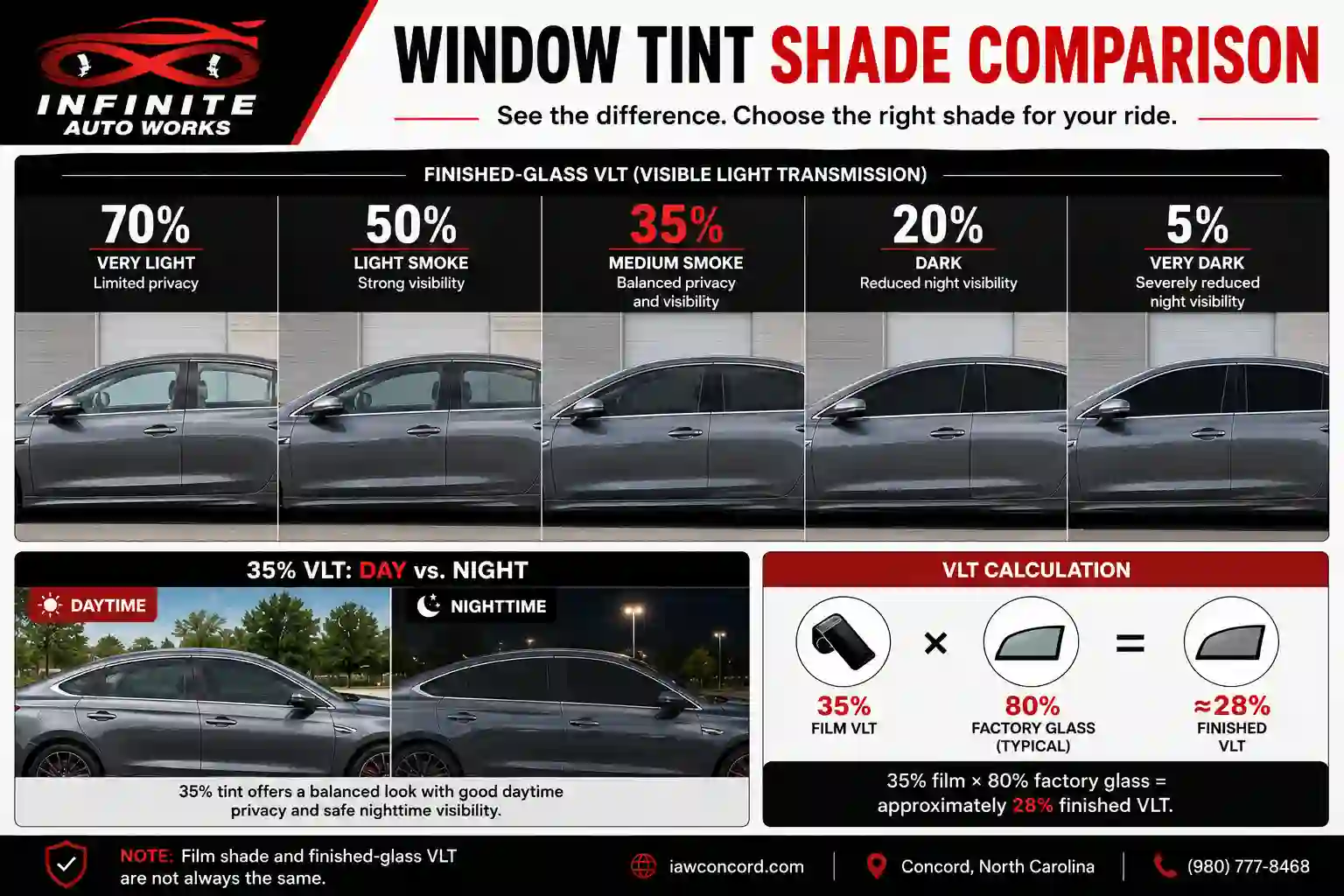
VLT values multiply rather than add. Film rated at 35% over glass rated at 80% produces about 28% combined VLT. The simple estimate is 0.35 multiplied by 0.80, which equals 0.28.
Product tolerances and glass variation can also affect the final result. A legal target should begin with a meter reading of the bare glass. Check the completed window again after installation.
How Does 35% Tint Compare With 50%, 20%, and 5%?
Thirty-five percent sits between a light 50% shade and a darker 20% shade. The table describes finished-glass VLT, not a promise that every shade is legal on every window.
| Finished VLT | Daytime appearance | Daytime privacy | Night visibility | Common consideration |
| 70% | Very light | Limited | Strong | Heat control with minimal visual change |
| 50% | Light smoke | Light | Strong | Clearer view with modest shade |
| 35% | Medium smoke | Moderate | Practical for many drivers | Balance of appearance and visibility |
| 20% | Dark | Strong | Reduced | More privacy with a larger night tradeoff |
| 5% | Very dark | Very strong | Severely reduced | Specialized use where lawful |
Thirty-five percent usually suits drivers who want a visible change without an extremely dark cabin. Fifty percent favors clarity. Twenty percent provides more privacy but can make unlit roads and parking maneuvers harder.
Does 35% Tint Reduce Heat and UV Exposure?
A 35% shade can reduce glare and solar energy, but darkness alone does not prove strong heat rejection. Two films with the same VLT can perform very differently. Film construction and tested solar specifications explain that difference.
Total Solar Energy Rejected, or TSER, summarizes overall solar performance. Infrared figures describe a selected part of infrared energy. Buyers should compare the exact test method and film data sheet instead of relying on one large percentage.
Ultraviolet rejection also varies by product. Many quality films list high UV protection, but the exact claim must match the installed series. A lighter advanced film may manage heat better than a darker entry-level film.
Which Film Types Are Available in a 35% Shade?
Manufacturers produce 35% shades in several film constructions. Product names and exact performance vary, so buyers should compare series rather than categories alone.
Dyed Film
Dyed film mainly changes appearance and reduces visible glare. It often costs less than advanced options. Product quality affects color stability, clarity, and useful life.
Carbon Film
Infinite Auto Works installs Geoshield carbon film in this category, built for that balance of price and solar performance.
Ceramic Film
Infinite Auto Works installs Geoshield ceramic film in this category. Ask for the film’s VLT, TSER, warranty, and construction in writing.
Is 35% Window Tint Legal in North Carolina?
North Carolina generally requires at least 35% total light transmission on regulated side and rear windows. A reading above 32% on an approved meter is conclusively presumed compliant. This standard applies to the completed glass, not only the film label.
Vehicle class and window position change the answer. Windows behind the driver on a qualifying multipurpose vehicle are exempt from the 35% VLT floor. Front side windows remain regulated, and passenger cars follow different rear-window rules.
The full guide to North Carolina window tint requirements explains windshield placement, reflectance, colors, medical permits, and vehicle exceptions. Annual tint inspection checks ended on December 1, 2025, and the related testing fee was eliminated. Officers can still test tint during a stop, and drivers must now roll down a tinted window when an officer approaches that side.
Who Should Choose 35% Window Tint?
Thirty-five percent can suit daily drivers who want moderate privacy and a clear outward view. It is often easier to use at night than darker options. The final choice should still reflect the driver’s eyesight and normal roads.
Frequent night drivers should view a sample from inside the vehicle. Commuters using bright city streets may accept more shade than drivers on unlit country roads. Rain, age-related vision changes, and mirror use also matter.
Heat-focused buyers should choose film technology before choosing darkness. A lighter film with verified solar control may provide the comfort you want. Drivers seeking strong privacy may prefer darker rear glass where state law permits it.
How Should the Finished VLT Be Checked?
A shop should measure the untreated glass before recommending a legal film. That first reading helps estimate the finished VLT. It also exposes differences between front glass and factory privacy glass.
After installation, a second meter reading confirms the result. The invoice should identify the film manufacturer, product series, shade, covered windows, and warranty. The guide to what affects window tint pricing explains why film and coverage details also affect a quote.
Owners should also inspect edges, seals, and optical clarity before leaving. Small water pockets can appear during initial drying. Discuss large debris, creases, or major gaps with the installer.
Where Can Drivers Confirm North Carolina Tint Rules?
The current North Carolina General Statute §20-127 controls VLT, reflectance, windshield placement, exemptions, and tint-related offenses. Official law should take priority over old charts and social-media advice.
Rules and state procedures can change after publication. Vehicle classification can also affect rear-window limits. Drivers with medical or unusual vehicle questions should confirm the current process with the proper state agency.
Conclusion
Thirty-five percent window tint creates a medium appearance with moderate daytime privacy. It remains easier to use at night than 20% or 5% for many drivers. Factory glass, cabin color, lighting, and film construction determine how it looks and performs.
Infinite Auto Works can measure existing glass and compare films against real driving needs. Our best tint percentage for daily driving guide compares visibility, privacy, and comfort. Review those factors before selecting a shade.
Frequently Asked Questions
Is 35% window tint dark enough to provide privacy during the day?
Thirty-five percent tint provides moderate daytime privacy, but it does not fully conceal a vehicle’s cabin. People nearby may still see outlines or faces in bright light. Dark interiors make the cabin look more shaded, while pale seats and an open sunroof can make the cabin easier to see.
Can drivers see clearly through 35% window tint at night?
Many drivers find 35% tint practical at night, but it still reduces available light compared with clear glass. Dark roads, rain, parking garages, and reduced night vision make the difference more noticeable. A physical sample viewed from the driver’s seat provides the most useful preview.
Why can 35% tint look different on two vehicles?
Factory-glass VLT, interior color, window angle, weather, and cabin lighting change how 35% tint appears. Dark seats usually make glass look darker from outside, while light seats reflect more cabin light. Camera exposure also makes online photographs unreliable for exact shade matching.
Does installing 35% film produce a finished 35% VLT reading?
No. Film VLT combines with the factory glass instead of replacing its rating. Applying 35% film to glass that transmits 80% of light produces about 28% total VLT. A shop should meter bare glass first, estimate the combined result, and check the completed window after installation.
Is a 35% film automatically legal on front windows in North Carolina?
No. North Carolina measures total light transmission through the finished glass and film. Regulated windows generally need at least 35% VLT, with readings above 32% conclusively presumed compliant on an approved meter. Factory glass can make film labeled 35% produce an unlawful result.
Does darker 35% window tint reject more heat than lighter film?
Not automatically. VLT measures visible light, while film construction and tested solar ratings describe heat performance. A light ceramic product may reject more solar energy than a darker dyed product. Compare the exact film series, TSER data, warranty, and finished VLT before choosing.